
Pack format is the first detail to get right when sourcing Good Day cappuccino in Kampala. A pack contains 20 sachets, while a box contains 10 individual sachets, each weighing 25 g. These formats help shoppers and retailers compare what they need for home use or shelf stocking.
It’s easy to focus on the product name and overlook details that matter when buying Good Day cappuccino in Kampala. Pack size, clear product information and the condition of the stock all help you make an informed choice.
This guide explains what to check when choosing Good Day cappuccino and how to plan a suitable quantity. You’ll learn to compare pack formats, read the product information on the label and match your order to household or retail needs.
You can source Good Day cappuccino from Kikuubo Suppliers Uganda, which sells groceries and daily essentials at retail and wholesale. The practical steps are simple: review the pack, decide how much you need and choose an ordering method.
Key Takeaways
- Compare the pack format with your household or shelf needs before buying, and read the label to identify the product and serving details.
- Use the nutrition information per sachet to make an informed choice about sugar, fat, energy and caffeine.
- For retail shelves, consider how quickly customers are likely to buy the product when deciding what quantity to source.
- Kikuubo Suppliers Uganda offers Good Day Cappuccino alongside grocery staples, with online and WhatsApp ordering options.
Good Day cappuccino Kampala
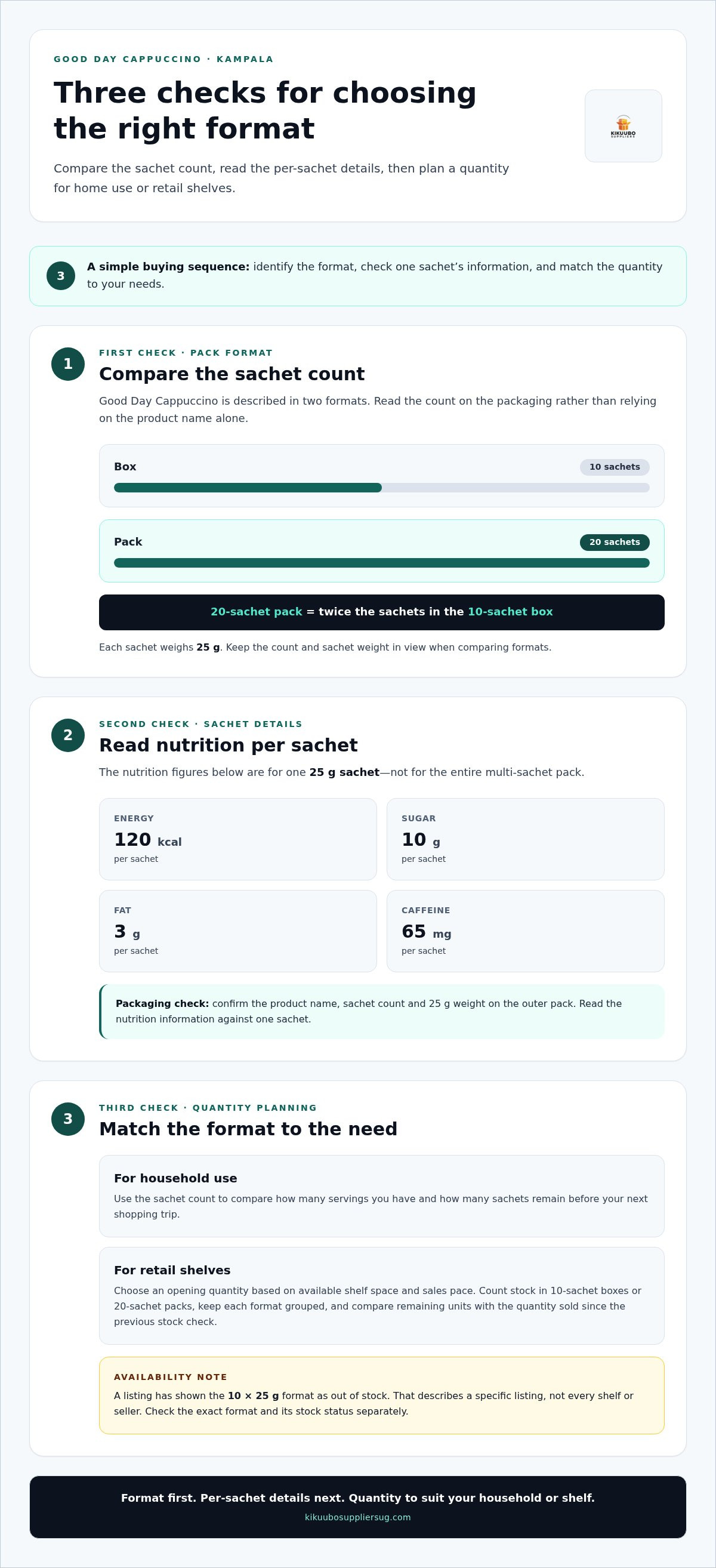
For shoppers and retailers, the first useful distinction is pack format. Good Day Cappuccino is sold in formats described as a 20-sachet pack and a box of 10 sachets. Each sachet weighs 25 g. Compare the format named on the packaging with the quantity you plan to buy, rather than relying on the product name alone. This helps distinguish a larger pack from a smaller box when arranging household purchases or shelf stock.
Use the sachet as the basic unit when planning quantities. A 20-sachet pack contains twice as many sachets as a 10-sachet box. The box format is described as 10 individual sachets, each weighing 25 g. For a retailer, the count helps estimate how many individual servings one pack represents. For a household, it helps compare how many sachets remain before the next shopping trip. Keep the pack count and sachet weight together when comparing formats.
Read the sachet details
Nutrition figures are given per sachet, so keep the serving unit in view. One Good Day Cappuccino sachet contains 120 kcal of energy, 10 g of sugar, 3 g of fat and 65 mg of caffeine. These figures help shoppers compare the information on a pack with their own preferences. They also give retailers clear details to communicate when customers ask what one sachet contains. Don’t confuse per-sachet figures with values for an entire multi-sachet pack.
- Check that the stated weight is 25 g per sachet.
- Read nutrition figures against one sachet, not the whole pack.
- Compare the 10-sachet box with the 20-sachet pack.
Packaging is the practical reference point at purchase. Read the product name, sachet count and weight on the outer pack, then inspect the individual sachet information where visible. If a shelf label describes a box of 10, the packaging should make that format clear. If the product is sold as a pack of 20, use that count to understand the quantity you’re taking home or adding to stock. Clear comparisons reduce mix-ups between formats.
Plan shelf quantities carefully
For retailers working with Kikuubo Suppliers Uganda, choose an opening quantity based on the shelf space available and the pace of sales. Use the 10-sachet box or 20-sachet pack as the unit for counting stock. Keep one format grouped together, and make its sachet count easy to see. When replenishing, compare remaining units with the quantity sold since the previous stock check. This simple routine makes it easier to spot which format needs attention without guessing.
A product listing has shown the 10 x 25 g format as out of stock. That status describes a specific listing, not every shelf on the market. Retail availability can differ between sellers and over time. For a shop, the practical lesson is to treat format and stock status as separate details. Identify the exact pack first, then consider whether its quantity suits your shelf plan. Don’t assume that a listing for one format describes every Good Day Cappuccino pack.
Good Day cappuccino sourcing works best when the buyer can identify the required format, read the per-sachet information and plan quantities clearly. A household shopper may prefer a pack count suited to regular use. A retailer may compare the two formats against available shelf space and sales movement. In either case, the 25 g sachet is the common unit for understanding the listed nutrition values and total sachet count.
Before choosing, use three steps: identify whether you need the 10-sachet box or 20-sachet pack, read the 25 g sachet and nutrition details, then match the quantity to household use or shelf capacity. These checks keep the decision grounded in what the packaging states. They also give shoppers and retailers a consistent way to compare formats without confusing the number of sachets with the details for one serving.
Kikuubo Suppliers Uganda: Snacks Pringles
Kikuubo Suppliers Uganda sells Good Day cappuccino for household shoppers and retailers ordering groceries across Uganda. Add it to a home grocery order or consider it alongside other shelf staples. The wider selection includes Snacks Pringles, Kellogg's Corn Flakes and Gold Valley BBQ Sauce.
Retailers can plan grocery orders around the categories their customers buy, while households can browse familiar pantry items in one place. Choose the products that fit your needs, then order online or through WhatsApp.
For Good Day Cappuccino and related grocery shopping, contact Kikuubo Suppliers Uganda or visit kikuubosuppliersug.com.
Make Your Next Grocery Order Count
Build your next grocery order around the items you actually need. Retailers can consider customer demand and available shelf space when planning a product mix. For a household order, group pantry essentials into a clear list before buying. This helps you focus on useful additions rather than shopping by habit.
Kikuubo Suppliers Uganda sells Good Day cappuccino alongside Snacks Pringles and Kellogg's Corn Flakes. These grocery items can help you plan a broader order for your shop or household. Make a list of what you need, then order online or through WhatsApp.
Ready to take the next step? Contact Kikuubo Suppliers Uganda about sourcing Good Day cappuccino in Kampala. Start with the items that fit your needs, and make your next order a practical one.


